Why Oil Mist Filtration Matters
Oil mist, vapour, smoke and fine aerosol particles are common by-products of machining and metalworking. Without effective extraction, these contaminants can affect employee wellbeing, equipment and production areas.
Deposits can accumulate on machinery, floors and electrical components, increasing contamination, maintenance requirements and the risk of equipment faults.
MICROIL Oil Mist Filtration
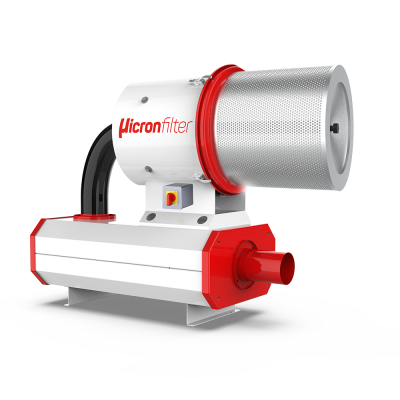
The MICROIL range from Micronfilter provides compact, efficient oil mist filtration for machining and metalworking applications. Designed to capture oil and emulsified coolant mist directly from machine tools, MICROIL combines a three-stage filtration system with high-performance, dynamically balanced impellers for reliable, low-vibration operation. Available in seven models with airflow capacities from 600 to 3,000 m³/h, the range offers flexible installation, straightforward maintenance and the option to add pre- and post-filtration to suit specific applications.
How Is Oil Mist Produced?:
Metalworking fluids lubricate tools, control temperatures and remove swarf during milling, drilling, turning and grinding.
High-speed tools, heat and pressurised coolant generate fine airborne droplets, forming oil mist. Higher temperatures can also produce vapour and smoke.
The Risks of Uncontrolled Oil Mist
Uncontrolled oil mist can create health, safety and operational risks.
Workplace health
Airborne mist can irritate the respiratory system, while skin contact with metalworking fluids may cause irritation and dermatological problems.
Machinery and equipment
Oil deposits can contaminate machinery, ventilation systems and electrical components, potentially causing faults and costly repairs.
Slips and fire risk
Oil and coolant deposits create slip hazards, while combustible residues can increase fire risks in certain environments.
Bacteria and fungi
Poorly managed metalworking fluids can encourage bacterial and fungal growth, making effective contamination and coolant management essential.
Industrial Oil Mist Filtration
Oil mist filtration systems capture airborne contaminants before they spread throughout the workplace.
Multi-stage filtration removes larger droplets and finer particles in successive stages, helping improve air quality, reduce surface deposits and extend final filter life. Filter condition indicators can identify when maintenance or replacement is needed.
Depending on the application, recovered oil and coolant can be returned to the machine or collected for disposal.
Recirculating Clean Air
Where suitable, filtered air can be returned to the production area instead of discharged externally.
Key benefits include:
- Reduced external ducting requirements
- Retention of heated or conditioned air
- Lower heat loss and potential energy savings
- Cleaner production areas
- Improved airborne contamination control
Suitable systems can also recover oil and coolant for reuse.
Key Benefits of Effective Oil Mist Filtration
An appropriately designed system can improve workplace conditions and production efficiency.
- Healthier working environment
- Protection of machinery and electronics
- Cleaner production facilities
- Reduced cleaning and maintenance
- Recoverable oil and coolant
- Improved energy efficiency
- Lower operating costs
- Support for workplace compliance
A Cleaner Approach to Machining
Oil mist is a common by-product of machining, but effective extraction can prevent it from becoming a persistent workplace problem.
Capturing contaminants at source helps protect employees, equipment and production areas while supporting a cleaner, safer and more efficient working environment.